
The first quarter of calendar 2023 will see new faces heading four large public-sector banks -- Canara Bank, Bank of Baroda, Indian Overseas Bank, and Bank of India.

The number of fraud cases reported by private banks outnumbered those by public sector banks for the second consecutive year.

Credit card spending dropped 11 per cent sequentially in November at Rs 1.15 trillion, but topped Rs 1 trillion for the ninth month straight, data from the Reserve Bank of India (RBI) showed as the festive season ends and consumption activity slows down. Year-on-year (YoY), spending was up 29 per cent. Card spends have consistently topped the Rs 1 trillion mark, led by the rising share of e-commerce transactions.

Even as competition to garner deposits is intensifying into a tight liquidity and high credit growth scenario, Bank of Baroda (BoB) has hiked deposit rates for the second time in the current quarter. Also, private lender IDBI Bank has come out with a limited period offer on its term deposits. It is offering 7.6 per cent interest rate for a tenor of 700 days, effective from December 2022.

The regulatory changes brought in by the insurance regulator and the amendments proposed to the Insurance Act by the Centre may herald a new dawn for the sector in India. This may result in insurers bringing out more consumer-led products, top honchos of general insurance companies of the country concurred at the Business Standard BFSI Insight Summit 2022.

India has a huge untapped population which doesn't have facilities for financial aid and insurance, and it is perhaps plausible to look at the option of having niche players catering to smaller sectors akin to non-banks and microfinance institutions in lending, said Rakesh Joshi, member (Finance & Investment), Insurance Regulatory and Development Authority of India (Irdai). Speaking at the Business Standard BFSI Insight Summit, Joshi said, "Today, most of our insurance companies operate at a national level. There is arguably a case for having differentiated operations, which cater to niche sectors the same way we have non-banking financial companies (NBFC) and microfinance institutions in lending." "The capital requirement for niche players may not be as large as those having national ambitions. "Enabling these niche players, which require lower capital, will enhance the penetration in areas which hitherto had not seen traction from large players," he said.

Health premiums have picked up again after a slight moderation in growth, taking the non-life insurance industry's growth to 22 per cent in November, and to almost 17 per cent so far this financial year. Health premiums grew by 22.54 per cent in the April-November period, driven largely by group health plans, which have seen good growth due to rationalisation of discounts in premiums caused by adverse claim ratios in prior periods, medical inflation, and enhanced coverage. Health premiums grew by 29 per cent in the same period last year.

Exuding confidence in sustaining the tempo of credit growth, public sector bankers said on Wednesday that consolidation in the public sector bank (PSB) space has given them a robust base to scale. The privatisation of PSBs can be done through divestment of government stake to a wider base of investors without haste. There is nothing to worry about at this point (high credit offtake) as underwriting standards and risk management are much better.

Breaking the streak of continuous fall in outstanding amounts, non-resident Indian (NRI) deposits rose for the first time in the financial year to $134.54 billion in October 2022. The figure was $133.67 billion in September. Reserve Bank of India (RBI) data showed that NRI deposits were in shrinking mode for the first six months of FY23. They fell to $133.67 billion in September from $139 billion in March.

Sundararaman Ramamurthy has been an interesting choice for the publicly-listed BSE, which has seen its chief move to bigger rival -- the National Stock Exchange (NSE) -- in July. Having spent nearly two decades at the country's largest bourse, Ramamurthy is among the early architects of NSE and understands all the cogs of the exchange wheel like only a few others in the country. Just like NSE's core team, which includes its founder RH Patil, the 59-year-old Ramamurthy has worked at the Industrial Development Bank of India (IDBI) before moving to NSE in 1995.

'Yet the market didn't do all that badly because it was cushioned by domestic inflows.'

The bank has said rent payments will not earn reward points, and redemption of reward points on various cards have been capped in certain segments.
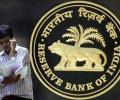
The Reserve Bank of India (RBI) has put in place a framework to allow overseas subsidiaries and branches of Indian banks and financial institutions to undertake activities not specifically permitted in the Indian domestic market. The framework also specifies the applicability of these instructions to International Financial Services Centres in India, including Gujarat International Finance Tec-City (GIFT City). While these activities may not need prior approval, they are subject to compliance with all applicable laws/regulations and conditions stipulated by the RBI and those prescribed by the host regulator.

Global rating agency Fitch said on Monday that bank credit growth in excess of 13 per cent year on year in FY23 could put pressure on core equity tier ratios (CET1) of banks, especially public sector lenders. It may limit the buffers of Indian banks to absorb potential future losses. Bank credit expanded by 11.5 per cent in FY22. Full-year loan growth for FY23 will represent a modest slowdown from the 17 per cent YoY pace in H1FY23.

After securing a euro 150 million Credit line for solar energy finance from a German financial institution, State Bank of India is in talks with european Investment Bank for about euro 200 million to fund climate finance. Recently the country's largest lender obtained euro 150 million in green funding from German government-owned KFW on soft terms and a long repayment period. SBI will use funds to finance solar energy projects.
Credit card issuers saw significant erosion of their card base during the July-September quarter as the Reserve Bank of India's (RBI) norms mandated deactivation of cards that have been inactive for a year. The second quarter of the current financial year saw outstanding cards-in-force decline by 2.55 million to 77.7 million. Prior to this, the industry, on an average, was witnessing a net addition of over 1.5 million credit cards a month as players became aggressive on the unsecured lending business after the pandemic.

Two firms belonging to the Adani group - India's most valued conglomerate - are part of the Nifty 50 index. The group, however, has no representation in the Sensex. And it could stay this way if a proposed index qualification rule change gets approved. Recently, Asia Index, a joint venture between S&P Dow Jones Indices and BSE responsible for index composition, floated a consultation paper where it proposed that a stock must have a derivative contract to be eligible for inclusion in the flagship 30-share Sensex index.
The outstanding credit card base dropped to 77.99 million in August from over 80 million in July, mainly on account of the new norms of the Reserve Bank of India (RBI) that warrant the deactivation of cards that are inactive for a year. While there was a 2.8 per cent decline in net card additions on a month-on-month (MoM) basis in August, a first in many months, credit card spends slipped 3 per cent on a high base. Still, spends topped the Rs 1-trillion mark for the sixth consecutive month.

Come October 1, merchants, payment aggregators and acquiring banks can no longer store the card details of customers.
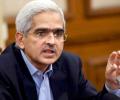
The increasing involvement of Big Tech in the financial system could give rise to concentration risk and there are potential spillovers, which call for closer attention, Reserve Bank of India (RBI) Governor Shaktikanta Das said on Tuesday. "...enormous amounts of consumer data is being generated and leveraged upon by a few entities (the so-called Big Tech) by virtue of their huge customer base. "Such developments raise concerns on concentration risk and potential spillovers as their level of engagement with the financial system strengthens in the years to come," Das said at the Global Fintech Fest 2022.
 © 2026 Rediff.com - Advertise with us - Disclaimer - Privacy Policy - Sitemap - Feedback - About us - Terms of use - Grievances